
If you are choosing between the Kodak Pixpro C1 and the Kodak Pixpro FZ55 for a simple pocket camera that feels different from a phone, this comparison shows the real strengths of each model so you can decide which one fits your daily shots.
I used both for walks, family moments, and casual video to see how the fixed-lens C1 stacks up against the zoom-equipped FZ55.
You will finish knowing which camera matches your style, whether you want easy selfies or flexible reach.
| Feature | Kodak Pixpro C1 | Kodak Pixpro FZ55 |
| Sensor | 13MP 1/3″ BSI CMOS | 16.35MP 1/2.3″ CMOS |
| Lens | Fixed 26mm equiv. f/2.0 | 28-140mm equiv. f/3.9-6.3 |
| Optical Zoom | None (4x digital) | 5x optical (30x combined) |
| LCD | 2.8″ 180° tilting | 2.7″ fixed |
| Video | 1080p up to 60fps | 1080p at 30fps |
| Battery | Built-in Li-ion, USB-C, ~200 shots | Rechargeable Li-ion |
| Weight | Approx. 115g | Approx. 105g |
| Key Strength | Selfie screen + bright fixed lens | Optical zoom versatility |
| Approx. Price | Around $100 | Around $140 |
My Real-World Experience With Both Cameras
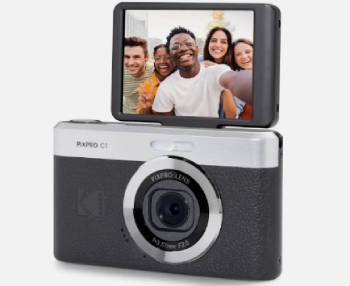
I picked up the Kodak Pixpro C1 first because the tilting screen and bright f/2.0 lens looked perfect for quick selfies and street snaps.
The camera feels tiny and light in the hand.
I flipped the 2.8-inch screen upward, framed a shot of myself with a friend, and the fixed 26mm view felt naturally wide.
Focus locked on faces without much fuss in good light.
The colors came out with a slightly warm, nostalgic tone that many people like in these modern digicams.
Battery life held for a full afternoon of mixed stills and short 1080p clips.
USB-C charging made it easy to top up with the same cable I use for my phone.
Then I switched to the FZ55 for a weekend of mixed distances.
The 5x optical zoom immediately proved useful when I wanted to pull in a detail across a park or tighten a portrait without walking closer.
The larger 1/2.3-inch sensor and higher megapixel count gave a bit more detail in well-lit scenes.
Scene modes and face detection helped with group shots.
The fixed screen felt more traditional, and I had to hold the camera out at arm’s length for selfies.
Both cameras stay simple to operate.
Menus are straightforward and the auto modes handle most everyday situations.
Neither replaces a modern smartphone for low light or speed, yet both deliver the distinct feel of a dedicated camera that many people currently seek.
From an analytical view the C1 prioritizes convenience, selfies, and a brighter wide lens while the FZ55 prioritizes reach and slightly higher resolution.
Your choice depends on whether fixed wide-angle fun or optical zoom flexibility matters more in your daily carrying.
Pros and Cons Of Kodak Pixpro C1
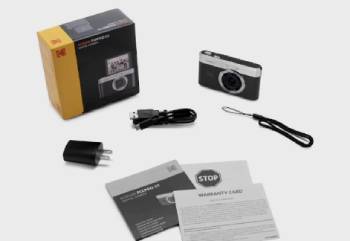
Pros Of Kodak Pixpro C1
- Bright Fixed Lens: The f/2.0 26mm-equivalent lens gathers more light than the FZ55 wide end and suits environmental portraits and street scenes.
- 180-Degree Tilting Screen: The 2.8-inch display flips fully upward for easy selfies, vlogging angles, and creative low or high perspectives.
- USB-C Charging: Modern Type-C port allows convenient charging with common cables and power banks.
- Compact Lightweight Body: At around 115g and a slim profile the camera disappears into a pocket or small bag.
- Full HD 60fps Video: Records smoother motion than the FZ55’s 30fps option in good light.
- Simple Retro Appeal: Classic styling and limited controls encourage straightforward shooting without menu diving.
- Macro Capability: Focuses as close as 8cm for detail shots of objects or food.
- Affordable Entry: Lower price makes it an easy impulse or gift purchase.
- Quick Power and Operation: Starts fast enough for spontaneous moments and stays intuitive for beginners.
- Warm Color Character: Produces the slightly nostalgic digicam look many users currently enjoy.
Cons Of Kodak Pixpro C1
- No Optical Zoom: Limited to 4x digital zoom which softens quality when you try to get closer.
- Smaller Sensor: 1/3-inch sensor shows more noise and less detail once light drops.
- Fixed Battery: Built-in cell cannot be swapped mid-day if power runs low.
- Basic Autofocus: Single-point AF can feel slow or hesitant with moving subjects.
- Limited Low-Light Performance: Images soften and gain noise indoors or at dusk.
- No Image Stabilization: Handheld shots at slower shutter speeds risk blur.
- Modest Resolution: 13 megapixels is adequate for social sharing but not for heavy cropping.
- Plastic Build Feel: Lightweight construction prioritizes portability over premium solidity.
- microSD Limit: Supports cards only up to 32GB in many listings.
- Screen Visibility: The tilting LCD can be hard to see in bright outdoor sun.
Pros and Cons Of Kodak Pixpro FZ55
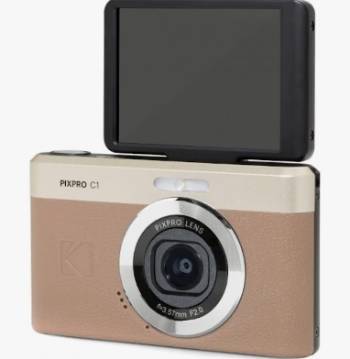
Pros Of Kodak Pixpro FZ55
- 5x Optical Zoom: 28-140mm range lets you frame distant subjects without losing quality to digital zoom.
- Higher Resolution Sensor: 16.35MP 1/2.3-inch sensor captures more detail in good light than the C1.
- Versatile Scene Modes: Multiple presets including portrait, landscape, night, and face detection simplify different situations.
- Digital Image Stabilization: Helps reduce shake during stills and video compared with the unstabilized C1.
- Familiar Compact Form: Traditional point-and-shoot shape feels natural for users returning to dedicated cameras.
- Macro Reach: Focuses close at the wide end for detail work.
- Colorful Body Options: Available in multiple colors for personal preference.
- Solid Everyday Zoom: Covers most casual travel and family framing needs without changing lenses.
- HDR Option: Available for higher dynamic range in high-contrast scenes.
- Rechargeable Battery System: Supports in-camera charging for repeated use.
Cons Of Kodak Pixpro FZ55
- Slower Lens: f/3.9-6.3 aperture gathers less light than the C1’s f/2.0, especially at the tele end.
- Fixed Screen: No tilt makes selfies and awkward angles harder than on the C1.
- Older Charging Port: Typically uses micro-USB rather than modern USB-C.
- 30fps Video Limit: Full HD recording tops out at 30 frames per second.
- Plastic Construction: Similar lightweight feel that can seem less refined.
- Basic Low-Light Results: Noise and softness appear quickly as ISO rises.
- No Advanced Connectivity: Lacks Wi-Fi or Bluetooth for quick phone transfers.
- Digital Zoom Quality Drop: Combined 30x zoom softens noticeably beyond optical range.
- Modest Battery Life: Expect similar shot counts to the C1 under mixed use.
- Slower Overall Operation: Autofocus and processing can lag behind modern phone cameras.
Detailed Image Quality Comparison in Different Lighting
I spent time shooting the same scenes with both cameras in bright sun, open shade, indoor ambient light, and evening conditions.
In bright daylight the FZ55 often showed a bit more fine detail thanks to its higher megapixel count and larger sensor.
Colors on both looked pleasing and slightly saturated in a way that feels intentional rather than clinical.
The C1’s wider f/2.0 aperture helped keep ISO lower when clouds passed or when I moved into shade.
Skin tones on the C1 carried a gentle warmth that many people describe as the classic digicam look.
The FZ55 produced cleaner files when I zoomed optically to isolate a subject.
Once light levels dropped the differences became clearer.
Both cameras climb in ISO quickly and noise becomes visible.
The C1’s brighter lens delayed the onset of heavy noise a little longer in dim indoor settings.
Neither camera matches the computational processing of a recent smartphone.
You will see softness, reduced dynamic range, and color shifts when the light is poor.
For social media and small prints the daylight results from both remain enjoyable.
If most of your photos happen outdoors in good light either model can satisfy.
If you often shoot indoors or at dusk you will notice the limits on both and may prefer the phone for those moments.
Read More: Dusk Glide Pro 3.0 Razor
Video Performance Side by Side
I recorded short clips with both cameras in 1080p.
The C1 offers up to 60 frames per second which gives smoother motion when panning or when subjects move quickly.
The FZ55 sticks to 30 frames per second.
Stabilization is digital only on the FZ55 and absent on the C1 so handheld walking video shows more shake on both than a modern phone with strong electronic stabilization.
Audio is basic mono on both and picks up handling noise easily.
The tilting screen on the C1 makes framing vlog-style footage much easier.
I could monitor myself while talking to the camera without guessing the angle.
The FZ55 required more trial and error for the same type of shot.
Neither camera is a serious video tool.
They work for casual clips, family moments, and simple social posts.
If video is a primary need the C1’s higher frame rate and tilting screen give it a practical edge for self-recording.
Battery Life and Charging Reality
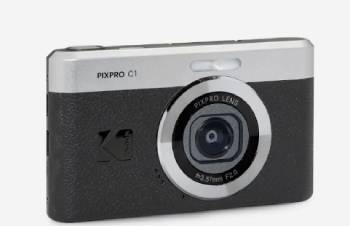
Official figures put both cameras around 200 shots under standard testing.
In real use with mixed stills, occasional video, and screen-on time I typically saw a full day of casual shooting before the battery warning appeared.
The C1 uses a built-in battery charged through USB-C.
I appreciated using the same cable as my phone and power bank.
The FZ55 uses a rechargeable lithium-ion cell that charges in-camera, usually through a micro-USB port.
Neither battery is designed for all-day heavy shooting without a top-up.
I started carrying a small power bank whenever I planned longer outings.
Charging speed is modest on both.
Plan to plug them in overnight or during meals rather than expecting rapid top-ups.
The modern USB-C port on the C1 feels more convenient in 2026 when most devices have moved away from micro-USB.
Build Quality, Ergonomics, and Daily Carry
Both cameras feel light and predominantly plastic.
The C1 is slightly thicker in the pocket because of the tilting screen mechanism yet still very pocketable.
The FZ55 has a more traditional compact shape that some hands find easier to grip.
Neither offers a deep handgrip or premium materials.
They are designed to be taken everywhere without worry about weight.
I carried the C1 in a jeans pocket and the FZ55 in a small shoulder bag.
Both survived normal daily bumps without issue.
The controls are minimal and require little learning.
Power, shutter, zoom rocker on the FZ55, and basic four-way navigation cover nearly everything.
The C1’s lack of optical zoom simplifies the body further.
If you value the lightest possible carry and modern charging the C1 edges ahead.
If you prefer a classic compact shape and optical zoom the FZ55 feels more familiar.
Real-World Shooting Scenarios
I tested the cameras across common situations.
On a city walk the C1’s wide 26mm view captured street scenes and architecture naturally.
Selfies with friends were fast thanks to the flipping screen.
On a park day the FZ55’s zoom let me photograph birds on a distant branch and then quickly widen out for a group shot without changing position.
At a family gathering the FZ55’s face detection and scene modes helped keep people sharp.
The C1 produced warmer group photos in open shade thanks to its brighter lens.
For food or close detail both cameras focus reasonably close in macro mode.
The C1’s wider aperture gave a bit more subject separation in close shots.
Travel packing favored both because of size, yet the FZ55’s zoom reduced the need to walk closer to subjects in crowded places.
Autofocus Speed and Reliability
Neither camera offers advanced subject tracking or phase-detect systems.
They use contrast-detect autofocus that works best on still or slow-moving subjects in good light.
In bright conditions both lock focus acceptably for snapshots.
When light drops or subjects move the systems slow down and can hunt.
I learned to half-press and wait a moment before fully releasing the shutter.
Continuous shooting exists but is modest and not suited to action.
These are cameras for deliberate, calm photography rather than sports or fast kids running toward you.
Color Science and Processing Character
The C1 often produces warmer, slightly softer images that many describe as nostalgic or film-like.
The FZ55 tends toward a cleaner, slightly more neutral rendering with a bit more contrast in good light.
Neither offers extensive in-camera creative filters compared with phones, yet both have basic color and scene options.
If you enjoy the classic digicam aesthetic the C1 will likely feel more charming.
If you prefer a bit more clarity and zoom flexibility the FZ55 aligns better.
Comparison Against Modern Smartphones
I regularly shot the same scene with my phone and each Kodak.
In good daylight the phone usually delivered better dynamic range, faster focus, and stronger detail through computational photography.
The Kodaks offered a different experience.
The physical shutter button, optical (or fixed) view, and separation from notifications created a more intentional feeling.
Many people currently buy these cameras exactly for that separation and the distinct look.
They are not replacements for a phone.
They are complementary tools for when you want a dedicated, simple, and slightly imperfect capture experience.
Storage, Cards, and File Management
Both cameras accept SD or microSD cards depending on the exact model variant.
The C1 is often limited to microSD up to 32GB in official guidance.
The FZ55 typically supports larger SD cards.
I used fast cards and had no write-speed issues for stills or 1080p video.
Files are JPEG only.
There is no RAW support on either model.
Transfer happens through the USB connection or by removing the card.
Neither camera offers wireless transfer, so plan on a cable or card reader.
Read More: Garmin HRM 200 Vs. HRM 600
Long-Term Ownership Thoughts
After weeks of use both cameras still feel fun for casual days.
The novelty of a dedicated digicam remains part of the appeal.
Battery health will be the main long-term consideration since the C1 battery is built-in.
The FZ55’s cell is more serviceable in theory.
Software support is minimal.
These are simple appliances rather than platforms that receive ongoing feature updates.
They should continue doing the same job for years if treated gently.
Value Analysis
At their respective prices both cameras deliver the core experience they promise.
The C1 costs less and adds a tilting screen plus USB-C.
The FZ55 costs more and adds optical zoom plus a larger sensor.
If selfies and modern convenience rank highest the C1 offers stronger value.
If optical zoom is essential the FZ55 justifies the extra cost.
Neither is a bargain if you expect smartphone-beating image quality.
Both are reasonable if you specifically want a simple dedicated camera with the classic digicam character.
Who Should Avoid Each Model
Avoid the C1 if you regularly need to zoom optically or shoot in low light.
Avoid the FZ55 if selfies and a tilting screen are central to how you shoot.
Avoid both if you need fast autofocus, strong low-light performance, RAW files, or wireless sharing.
In those cases a recent smartphone or a more advanced compact will serve better.
Frequently Asked Questions (FAQs)
It depends on needs. The C1 suits selfie and fixed-wide users while the FZ55 suits those who want optical zoom flexibility.
Yes for casual daylight snapshots, selfies, and simple video when you accept snapshot-level quality and value the tilting screen.
The C1 offers a tilting screen and brighter fixed lens while the FZ45 (similar to FZ55 family) provides optical zoom. Choose based on selfie priority versus reach.
Yes as an affordable zoom compact for everyday daylight use, travel, and users wanting a simple dedicated camera with 5x optical zoom.
Final Thoughts
After spending time with both I see two clear paths.
The Kodak Pixpro C1 gives you a bright wide lens, tilting screen, and modern charging in the smallest package.
The Kodak Pixpro FZ55 gives you useful optical zoom and slightly higher resolution for more framing options.
Match the camera to the photos you actually take and you will enjoy the simple pleasure of a dedicated digicam again.
You now have the practical differences to choose with confidence.